
As part of an initiative to unlock the potential of low carbon ventures across the developing world, the ERM Foundation in partnership with the Ashden Awards, will enable sustainable energy projects to develop with technical consulting from ERM.
Mariana Mazon, our international business support manager, has proposed a number of previous Ashden Award winners who could benefit from ERM consultants' support. These will be selected from a pool of projects provided need and skills can be matched. These include a biomass gasification electricity company in India, a mini hydro cooperative in Brazil and a biogas programme working in Vietnam.
After being selected, several ERM consultants will work on a project between February and April. As an added bonus, three of the projects with the greatest potential to scale will be selected by a panel to receive grants totalling £10,000.
(pic: Dam and bridge at Usina Granja Velha, built by 2010 winner CRELUZ in Brazil)
Monday, 14 February 2011
Ashden Award winners to receive free technical support from ERM in new initiative


Monday, 24 January 2011
Ashden judges pick this year's shortlist
 The Ashden Awards judges have just announced the shortlist of 32 projects for the 2011 Ashden Awards.
This year's international applicants, ranging from Africa, Asia and Latin America, use innovative approaches to tackle poverty and climate change, including creating fuel pellets from waste biomass, solar LED lanterns and small wind turbines.
The UK applicants are spread across the country, from Brighton and Devon to Scotland and Lancashire. These ground-breaking initiatives range from an enterprise using biodiesel for community transport to programmes retrofitting homes and community groups that promote behaviour change.
Take a look at our news page for more details on the projects that tackle poverty and climate change.
Wednesday, 19 January 2011
John Doggart says biggest challenge facing Green Deal is "building up our knowledge, skills and infrastructure"

The Green Deal plans to roll out retrofits on existing buildings across the country, helping us achieve the carbon emission reductions of 80% by 2050 compared to 1990 levels. It will provide loans for energy efficiency which apply to the house rather than the owner and aim to be a ‘one-stop shop’ giving advice on grants and other information. Service suppliers like M&S and B&Q are expected to play a major role.
The SEA runs the Old Home Superhome Project which won an Ashden Award in 2009 for encouraging people to green their older properties by ‘superhome’ owners opening their doors to the public. As a member of the Existing Homes Alliance, SEA has helped prepare a report and recommendations for the Government on how to accelerate low carbon retrofits across the UK. The report supports the Green Deal, but sets out some of the practical challenges to bringing it in:
“There is substantial work to be done on developing the policies, frameworks and mechanisms that will make the Green Deal a success.”
John Doggart believes the biggest challenge is increasing capacity:
“The Green Deal simply won’t work if we don’t start building up our knowledge, skills and infrastructure right now. There are not enough people trained or experienced in the green building sector at present. It could also be a fantastic opportunity to create new jobs during these difficult economic times.”
“Indeed, some aspects of retrofitting are highly specialised, requiring more research. How do we ensure that there is adequate ventilation for insulation to perform properly in our climate? In some European countries there has already been mass scale retrofitting but these countries have different climates to ours. They don’t have the same problems of damp and old, leaky building stock that we have. “
There are approximately 26 million homes in the UK that could benefit from the Green Deal.
Friday, 14 January 2011
Neil MacGregor shows solar lamp to Ashden Awards guests: "What people have always hoped for is now a reality"
 This week the Ashden Awards team celebrated the selection of a solar lamp and charger as the 100th object in the BBC series 'A History of the World in 100 Objects'. We were lucky enough to view the 100th object, exemplified by 2010 Gold Award winners d.light design's Nova lamp, at a reception in the British Museum.
Sarah Butler-Sloss, Founder Director, introduced the object to 100 distinguished guests, specially invited by the Awards team and members of the Development Board:
"This object is something which absolutely represents everything that the Ashden Awards stands for. In 2010 it won the Ashden Awards Gold Award. The reason for this is that it's a practical, simple and affordable object and it is available to the poorest of the poor across the globe. It replaces kerosene bringing clean, safe and bright light to households for the very first time".
The Director of the British Museum, Neil MacGregor, went on to explain how the 100th object was chosen:
"I was invited by Sarah to the 2010 Ashden Awards and, as I heard the account of what this solar panel and lamp does, and what solar panels do for people without mains electricity, setting them free, not just from the need for kerosene, but from all the political control that goes with mains electricity, all the corruption, the political interference, it suddenly became clear to me that this had to be the 100th object."
"In every society the greatest prayer is that light perpetual shine on you. And that is of course what this solar panel does, it gives you light perpetual. It lets you take the sun and use it when you need it. And we've put together some objects [in this display case] that show that through the millennia, and around the world, this is always what people have hoped for. And this is now a reality".
Saturday, 1 January 2011
Happy New Year!
2010 was a year of outstanding achievements for Ashden Award winners. As the new year begins, we take inspiration from some of last year's successes.
February 2010. The winter starts to thaw out with the news that Trees Water & People has won that prestigious prize – the UNEP Sasakawa prize.
As spring begins, the office receives the news that Zara Solar has won the Lighting Rural Tanzania competition. Meanwhile, GERES sells its one millionth stove and the Gaia Association is nominated for a World Bioenergy Award.
Summer. After the bustling of awards week in London, we hear that Stuart Conway, Co-founder of Trees, Water & People, wins the Sargent Shriver Award for Distinguished Humanitarian Service.
As autumn begins, Global Action Plan is highly commended for its charity partnership with Sky by the Charity Times Awards, and, we find out that d.light's solar lantern is being used to exemplify the 100th object as part of the BBC series 'A History of the World in 100 Objects'. Mid-autumn, more impressive news from our winners: Architype scoops the RIBA Sorrel Foundation Schools Award for St Luke’s School.
As the season draws to an end, the Green Apple Awards take place recognising the work of ERTC and its cookstoves and Global Action Plan for environmental best practice. And by October, d.light's solar lanterns are reaching 2 million lives. At the Energy Institute Awards AIDFI and Shidhulai Swanirvar Sangstha are recognised alongside Ringmer Community College. Meanwhile, in Scotland, the Isle of Eigg Heritage Trust is shortlisted for the Spirit of Scotland Award.
Finally, it's winter again, and, after months of hard work to secure support, AIDFI wins BBC World Challenge. And, just in, we've learnt that BIOTECH has won the Kerala State Energy Conservation award 2010 for best performance.
What a year 2010 was! We're confident that 2011 will be just as inspiring.
Happy New Year!
Thursday, 30 December 2010
Best Ashden Moments 2010: Mike picks his trip to the Isle of Eigg
For the eighth in our end-of-year series, where members of the Ashden team choose favourite moments from the year, Mike Pepler, UK awards manager, picks his trip to the Isle of Eigg.
When I visited the Isle of Eigg in February, I didn’t know whether they’d make it through to become a winner, but I was excited to be visiting them and seeing the work they’ve done.

The idea of a community taking responsibility for its own energy supply, as well as supplying their own water and a proportion of their own food, was very inspiring. To me, the people of Eigg are leading the way – showing the rest of us what we should be aspiring to.

The end result would look different in every community, of course, but the overall goal of supplying as much of the community’s needs as possible from the local area is one that is sure to help improve energy security and reduce CO2 emissions.

See also:
Simon picks the publication of Power to Our Neigbourhoods
Carla picks the moment AIDFI won BBC World Challenge Click here to read the rest of this post.
Tuesday, 21 December 2010
Best Ashden Moments 2010: Anne picks the moment GERES sold its one millionth cookstove
For the fourth in our end-of-year series, where members of the Ashden team choose favourite moments from the year, Anne Wheldon, Technical Manager, picks the moment GERES sold its one millionth improved cookstove.
I was really encouraged when I found out how much one of our past winners, GERES in Cambodia, had progressed since winning an Award in 2006. Not just that the sales of their improved stove had exceeded one million, but that it was now in use in nearly half the urban households in Cambodia. That’s what we need everywhere, sustainable energy technology becoming mainstream.
(pic: Mrs Samith using one of the 'New Lao' stoves, Chak Angre Krom, Meanchey District, near Phnom Penh)
See also:
Simon picks the publication of Power to Our Neigbourhoods
Carla picks the moment AIDFI won BBC World Challenge
Jane picks the moment the finalists arrived in London

Wednesday, 15 December 2010
Best Ashden Moments 2010: Carla picks the moment AIDFI won BBC World Challenge
 In the second in our end-of-year series, where members of the Ashden team choose favourite moments from the year, Carla Jones, Communications assistant, picks the moment the Alternative Indigenous Development Foundation (AIDFI) won BBC World Challenge.
I'd like to nominate the moment that AIDFI won the BBC World Challenge. It was great to have been able to chart their progress over the past six months, from first hearing they had been nominated in July and watching the film on the World Challenge website, to that nail-biting final week of voting when they were in the front running, to hearing they had won the overall prize. And it was brilliant to be able to use our blog, twitter and facebook pages to support them and spread the word!
AIDFI works hard for votes in last week of BBC challenge
AID foundation selected as finalist for BBC World Challenge
Blog Action Day: Ram pumps provide freshwater for 50,000 people Click here to read the rest of this post.
Tuesday, 14 December 2010
Best Ashden Moments 2010: Jane picks the moment the finalists arrived in London
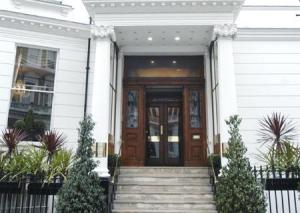
The moment I'd choose is meeting the finalists at the hotel on the Sunday before awards week starts. We have tea, show them their films and brief them on the week to come.
The hotel is the Grange Strathmore Hotel, a small cosy hotel in Kensington. We have afternoon tea, the finalists each give a short introduction about themselves and their work, and we tell them what will happen during the week and answer any questions they may have.
They each watch the short films that have been made about them, in a separate room, one at a time - we don't let the finalists see each others' films at this stage as they are still preparing to meet the judges for their final interviews. We get a very positive reaction to the films.
After tea, we take them on the tube to the office so that they know the route (three stops on the District line) and don't lose their way to the interview the following day.
As the Awards administrator, it's great to meet them all in person after many months of emailing. And it's also a relief to know that they've all made it to London!
Tuesday, 7 December 2010
Cancun delegates discussing "technology transfer" should remember that it's already happening
Much of the media coverage of COP16 has focused on disagreements over the UN-administered fund for mitigation and adaptation in poorer countries. But, writes Gloria Dawson, our policy and research officer, aid money is not the only help that developed countries can give to those already affected by climate change.
In the likely event of a failure to reach a legally binding agreement at Cancun on reducing CO2 emissions, technology transfer is one of the "back door" areas where there may still be significant agreement and progress.
In the context of climate change, technology transfer means nations sharing existing technologies and working together to develop new technologies which help countries adapt to or mitigate climate change. Expertise about wind turbine technology, or plans for solar micro-grids, or techniques for more water- and energy-efficient farming can be adapted from one country to another to meet specific needs.
This knowledge can be transferred directly through the public or private sector by relaxing certain patents or it could be brokered through existing UN mechanisms such as the Clean Development Mechanism (CDM). Technology transfer could also be supported through new international institutions. This is already happening in places, but there is still no formal international agreement to support it.
The Indian Environment Minister Jairam Ramesh has said that helping poor nations adapt to the effects of warmer temperatures should be a higher priority than reaching legally binding emissions reduction agreements. Right now in Cancun, delegates are discussing plans for a network of innovation centres to help developing countries. A key role for an international Climate Technology Centre would be identifying the specific needs of individual countries.
States and transnational corporations will always disagree over the degree to which intellectual property can should be shared. The representatives of rich countries often argue that, as most technological innovations are developed, registered and manufactured in developed countries, a relaxation of patents on technology inhibits technological innovation.
 But technology transfer is already a large part of what Ashden Award winners do. The winners scale up small sustainable energy projects, by disseminating skills, expertise and technology that make sustainable energy more widespread and effective. Our winners work with governments and the private sector, but they also skill up ordinary people and share their knowledge and innovations as widely as possible.
A good example is Aprovecho Research Centre, an Ashden Award winner in 2006 (with ProBEC, S.Africa) and 2009 (with SSM, China). Aprovecho builds fuel-efficient wood stoves that are appropriate to a wide range of needs. They build relationships with producers of stoves in different countries to create the best stoves that can be produced by local people at low cost.
At their Rocket Stove website, you can see many of these designs, as well as the online tool they have developed to help people design and build their own rocket stove. This is an impressive example of technology transfer in action, devolving knowledge and skills to those who need it, for little or no money.

Monday, 6 December 2010
Practical Action's new report highly relevant to Ashden winners

- highlights the inefficiency of countries having a national, grid-based energy plan/framework rather than thinking about decentralised power
- stresses that inefficient cookstoves waste time, money and damage health
- criticises the huge lack of information and access at community/local levels for affordable sustainable energy
- emphasises that energy access is a basic precondition for development
- outlines a ‘minimum standard’ of energy access for households worldwide.
Wednesday, 1 December 2010
Most popular 10 blogs in November
3. When electricity boards went on the offensive (27 Oct 2010)
Wednesday, 3 November 2010
Most popular 10 blogs in October
We've just checked the stats to see which blog had the most visits last month. The winner was the solar-powered lamp, with Juliet's SuperHome (a late entry) attracting a lot of interest in the last few days. Jo's visit to the biogas plant at SKG - published in March - is still in the Top 10.
1. Will solar-powered lamp be 100th Object of the World? (12 October 2010)
2. How to turn a small, cold, dark house into a SuperHome (27 October 2010)
3. Didcot pilots an energy source close to home (5 October 2010)
4. What the twitterverse thinks of the 100th Object (14 October 2010)
5. When electricity boards went on the offensive (27 October 2010)
6. Mike set to save £500-£600 on gas and electricity (29 October 2010)
7. Solar-powered lamp revealed as 100th Object (14 October 2010)
8. Brazil's ex-energy minister could become 'most powerful woman in the world' (7 October 2010)
9. Jo sees installation of biogas plant at SKG (10 March 2010)
10. Dulas brings Endurance wind turbines to the UK (31 August 2010)
Wednesday, 13 October 2010
Six days to go for international awards deadline
 A big thanks to the websites and tweeters who have spread our call for entries for the 2011 Ashden Awards. We now have less than a week left for international entries (deadline 19th October) and less than two weeks for UK entries (deadline 26th October). For UK entries, click here. For international entries, click here.
For the UK awards, thanks to (among others) Transition Network, IFV News, Fundraising.co.uk, Sustainability West Midlands, Keep Wales Tidy, Education Executive and Energy Saving Trust. For the international awards, thanks to (among others) REEEP, GVEP, SEED International, International Union for Conservation of Nature, PCIA, Scidev.net, Renewable Energy Focus, News from Africa and on Twitter thanks to (among others) @CleanEnergyOrg, @REfocusmag, @Stevebenvirotec, @NEW_FRONTIERS, @GreenFutures, @WelHatCouncil, @vphase, @LifeSizeMedia, @EnergySvgTrust, @paulbrichardson, @richgreenhouse, @GroundworkLON, @groundworkuk, @simonredding, @centre_alt_tech, @LBSecoschools, @ArchitypeUK, @NEW_FRONTIERS, @LearnFromNature, @kimtrapese, @groundworkuk, @ogunte, @wpartnerships and @Lovechaweng.
Friday, 8 October 2010
Two Ashden winners shine in energy access report

One of the speakers, Olivier Kayser, is managing director of Hystra Consultancy. His company has worked with Ashoka to produce a 100-page report, Access to Energy for the Base of the Pyramid (pdf here).
The report studied 150 projects in terms of their "economic viability" and "project scalability". When it came to the lunchtime talk, Kayser decided to single out two projects for praise.
The key discovery of these projects is to have started out from a base of what the beneficiary populations can manage to pay for them and to have already researched what can be done to improve them.
Tuesday, 28 September 2010
Merci pour le retweet

Apply for a 2011 International Ashden Award
Apply for a 2011 UK Ashden Award Click here to read the rest of this post.
Monday, 27 September 2010
Mrs Chevy Chase launches eco-schools programme in US
 One of the bright ideas launched at last week's Clinton Global Initiative - along, of course, with Hillary's $50 million for clean cookstoves - was the Energy Efficient Schools Initiative. The plan, reports the New York Times, is:
The first school districts that are participating will be on Long Island and in New York City. One of the lead organisers, Jayni Chase (pic), wife of US comedian Chevy Chase, and a longtime promoter of eco-education, says:
We involve the kids in modelling all the energy that's being used in the schools and how we fix it and how we make it better.
Let's hope the schools in Long Island and New York City make contact with some of the UK schools that have been Ashden Award winners. The teachers and pupils on the East Coast can always check out the activities page. Or watch the five-minute films. Or get some ideas for taking action.
The 10 Ashden award-winning schools are: St Columb Minor School, Okehampton College, Currie Community High School, Ashley Primary School, Sandhills Primary School, Ringmer Community College, Seaton Primary School, Woodheys Primary School, Eastchurch Primary School and Cassop Primary School.
Thursday, 23 September 2010
SNV joins clean cookstoves alliance as founding partner
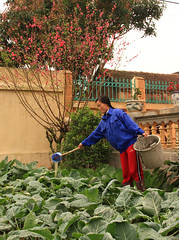
SNV pledges to contribute $250,000, as well as provide its extensive expertise in renewable energy, to help the Alliance meet its goal of deploying 100 million cookstoves by 2020.
Dirk Elsen, SNV Chief Executive, says,
The environment, renewable energy, and improved welfare of women and children are clearly defined SNV strategic concerns and each of our projects around the world is undertaken with them in consideration.
Follow the coverage on Hillary Clinton's $50m for clean cookstoves
See also: the Guardian's Madeleine Bunting on Clinton and cookstoves.
Update: Center for American Progress has this detailed summary: United States Joins Alliance to Promote Clean Cooking in Developing Countries (HT: ClimateProgress)
Wednesday, 22 September 2010
UN speakers make the same points as the Ashden Awards
 The streets round the United Nations have been cordoned off all week. The 175 guests going to last night’s 'Ending Energy Poverty’ went through four checkpoints and an airport security screening system. This special event was a dinner, hosted by the UN Foundation, the UN Development Programme, the UN Industrial Development Organization and the UN Environment Programme.
At last night's dinner in New York, Sarah Butler-Sloss (above), founder director of the Ashden Awards, heard distinguished speaker after distinguished speaker make exactly the same points as the Ashden Awards.
At the ‘Ending Energy Poverty’ event last night, I heard a series of really encouraging speeches by Ban Ki-Moon, Meles Zenawi, Prime Minister of Ethiopia, President Wade of Senegal, Nobuo Tanaka, CEO of the International Energy Agency, Tim Wirth, head of the UN Foundation and Olav Kjorven of UNDP, Dr Pachauri and Mary Robinson and Tom Friedman from the New York Times.
That is: there are 1.4 billion people in the world who don't have any electricity and 2.7 billion people (latest stats from the International Energy Agency) who lack access to clean cookstoves. It is this question of energy access, or to put it simply, providing energy to the poor, that is key for getting people out of poverty.
The UN says it is committed to making energy access universal by 2030, ie bringing power to those 1.4 billion people who are without energy access and cookstoves to 100 million people by 2020. All of the speakers spoke passionately about the link between poverty and energy and all supported this aim of the UN.
These are some notes from the dinner:
- Meles Zenawi, the PM of Ethiopia has a target that by 2025 his country will have zero emissions, ie be carbon neutral and energy independent by using the power of water = hydropower, geothermal, and biomass and solar. In the next five years they plan to increase energy access from 40% to 75% of the rural population.
- President Fischer of Austria said it was a 'moral imperative to bring energy access to the poor'.
- Mary Robinson spoke about the global cookstove initiative and emphasised the importance of listening to the local experts and local communities. The keys for success, she said, are being innovative and listening to the women. Mary Robinson quoted the line, 'Water is the oil of the 21st century and waste is the gold'.
- Dr Pachauri spoke about the importance of local initiatives and low-interest finance. He said BP is going to spend $20 billion cleaning up after the Gulf of Mexico spill. It would only cost $5 billion to bring light (solar lanterns) to one billion people in India.
- Tim Wirth from UNF said that at Copenhagen $30 billion was put on the table from the developed countries to help finance Africa's low carbon industries. Africa is ready, but where is the money? None of it has been produced.
- Nobuo Tanaka, head of the International Energy Agency, gave us many stats from their new report on energy poverty. The killer stat was that people in New York State consume the same amount of energy as the whole of sub-saharan Africa. He stressed the importance of rural decentralised power and new models of delivering energy through local generation of renewable energy.
It was amazing for me to hear the argument we have been making for years being spoken and accepted at this level. Now we have to hope that they find the right solutions and the right models to bring this change about. It’s a tremendous opportunity for the Ashden Awards to channel the learning and examples that have been provided by our winners into helping towards these solutions.
See also: To meet UN Millennium Development Goals, fight energy poverty, report says
Tuesday, 21 September 2010
Follow the coverage on Clinton's $50m for clean cookstoves
 "This could be as transformative as bednets or even vaccines."
Hillary Clinton, CGI, 21 Sept 2010.
Video.
Prospects Rise for Clean Cooking in Poor Places (New York Times)
Clinton unveils U.S. funds for clean cookstove push (Reuters)
Hillary on Fire About Clean Cookstoves (Daily Beast)
Secretary of State Clinton announces global cookstove initiative (Nature)
Hillary Clinton, cookstoves and "The Girl Effect". Watch a short film about why girls hold the key to transforming the world (Salon)
How Hillary Clinton's clean stoves will help African women (Guardian)
For more on stoves: Stoking up a cookstove revolution (Ashden Awards)
See also: Global Alliance for Clean Cookstoves and Hillary Clinton calls clean cookstoves a "cross-cutting issue"
And for some Ashden award-winning stove projects, go to: TWP/AHDESA, GERES Cambodia and Aprovecho/SSM.
