
Last week we blogged that Fatih Birol, chief economist at the International Energy Agency, had said the unsayable: that is, it's virtually impossible for us to meet climate change targets with current policies.
Dr Birol made these remarks at a lecture at the Grantham Institute for Climate Change. The slides from that lecture are now online. The concluding slide states:
Recently announced policies can make a difference, but fall well short of what is needed for a secure & sustainable energy future
The age of cheap oil is over, though policy action could bring lower international prices than would otherwise be the case
Stronger penetration of natural gas can have profound implications for energy markets and environment
Renewables are entering the mainstream, but long-term support is needed to boost their competitiveness
Lack of ambition in Copenhagen/Cancun has increased the cost of achieving the 2C goal & made it less likely to happen
Thursday, 27 January 2011
If you missed IEA's chief economist "saying the unsayable", slides from the talk are now online


Friday, 7 January 2011
Yes, the feed-in-tariff could shift the way we consume energy

Yesterday's post asked whether the UK could encourage a shift in energy use through the feed-in-tariff. Yes, says Mike Pepler, our UK awards manager, it could help balance out energy use.
Peak demand in the UK during the winter is between 5pm and 7pm (see pic above and the half-hourly live table here ). We need to even out energy demand throughout the day, regardless of whether or not households install renewables. At some point we could all be paying different electricity prices depending on time of day we use the energy. A tool in the feed-in-tariff to incentivise 'smart consumption' is therefore a step in the right direction.
But we have to watch out that such incentives don't deepen imbalances within society. One point I’ve heard raised by people working to tackle fuel poverty is that people in poverty can’t afford the new appliances to take advantage of electricity prices that vary according to time of day. If we moved towards time-sensitive pricing, they would miss out on the savings. Not only that, but the current feed-in-tariff is actually subsidised by all electricity consumers, but only those installing micro-renewables get the benefit.
These disadvantages don't mean we shouldn't have a feed-in-tariff. We need new generation capacity to reduce CO2 and to keep the lights on. Since that's in everybody's interest, you could say it's fair we all pay a bit to make it happen. But we must also be realistic about what solar can do. We will need other sources as well, and storage too.
Thursday, 16 December 2010
If Chris Huhne doesn't back renewables, the costs will be even higher

Ultimately, as electricity consumers, we all have to pay for the equipment that generates electricity. As we’re facing a future with rising fossil fuel prices, to build gas or coal power stations because they’re cheap is short-sighted. If we build renewable energy generation capacity, then not only do we not have to pay for fuel imports, we also have better security of supply, and will be closer to meeting out targets on CO2 emissions.
The BBC report is accompanied by a photo of a row of wind turbines out at sea. But as Anne Wheldon, our Senior Adviser, points out.
The extra cost is not just for renewable energy. Much of the extra cost will go to nuclear power, which is included in the new generation of power plants. The BBC reports that nuclear will not receive specific subsidies, but it also mentions that there will be feed-in-tariffs for nuclear. Let's make sure that the main focus is renewable electricity, otherwise we’re trading climate change for the other long-term problem of nuclear waste management.
Friday, 26 November 2010
The Economist backs renewables as "a matter of justice"
 The Economist's cover story today is: How to live with climate change. The paper says, 'It won’t be stopped, but its effects can be made less bad.' Climate change also provides
an extra reason for rich countries - which caused the problem in the first place - to find ways to help poor countries develop. That is a matter of justice, not just humanity.
The paper argues that prosperity is the best protection against global warming, but it recognises that as economies grow they consume more energy, which threatens to make the problem worse.
... rich countries can help, by offering poor countries support for greener energy technologies, and thus allowing them to make use of their capacity for generating renewable energy from water, wind and sunlight.
pic: Alamy/Corbis
Wednesday, 3 November 2010
Zardari sees opportunities in Pakistan for 'massive investment' in renewables

He advised the authorities concerned that all the new houses being built in the rural areas of Sindh under Behan Benazir Basti Programme should be provided with solar or wind power. The president also said new street lights should be solar/LED-based, billboards and electronic power-based neon signs should be converted to solar, and special industrial hubs set up in the coastal areas of Sindh and Balochistan based on the wind power harnessed in these areas.
Tuesday, 26 October 2010
Gamesa invests €150 million in offshore wind in UK
Yesterday morning, the Prime Minister, David Cameron, said, "I want us to be a world leader in offshore wind energy."
A few hours later, the Spanish company, Gamesa, announced plans to base the worldwide centre of its offshore business in the UK, investing up to €150 million through 2014.
Gamesa will also create a wind turbine blade manufacturing plant, a turbine assembly plant and associated R&D centre, port logistics and operation and maintenance services at different locations across the UK.
The British Ambassador to Spain, Giles Paxman, blogs today that this is:
a terrific vote of confidence in the UK’s future leadership in wind energy.
Tuesday, 12 October 2010
Solar lamp an "icon in social entrepreneurship"

These range from the iPhone ("epitomises our hyper-connected reality") to the washing machine ("liberated western women from domestic duties") to the plastic water bottle ("symbol of our wastefulness").
The solar-powered lamp is one of the four (out of five) contenders that have so far been selected by the series makers for the shortlist.
One of the most recent comments on the BBC's blog - from Elaine Khoo in Singapore - supports the specific example of the D.light solar-powered lamp.
it is an icon of the gravitational shift of social entrepreneurship - the focus of designing for consumers at the bottom of the pyramid which even the Fortune 500s are scrambling to get right.
One of this year's Ashden Award winners, D.Light has already sold over 220,000 units in over 30 countries via a network of rural entrepreneurs.
The 100th object will be announced on Thursday.
Will solar-powered lamp be 100th object of the world?
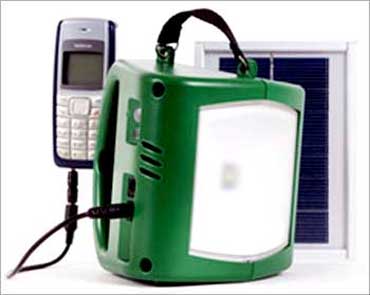
On Radio 4 this morning, the Today presenter Evan Davis inspected "a plastic and metal object that's about 15 centimetres by 10 centimetres".
As long as the sun shines, this object provides. It’s a life-changer and not just for a few of us. It could alter and secure the existence of billions.
The other three contenders to have been nominated are: a football shirt, a mobile phone and Antarctic clothing. The 100th object in A History of the World in 100 Objects will be announced on Thursday.
Tuesday, 5 October 2010
Ofgem says electricity traffic will double

There are two challenges here: one is preparing for the predicted doubling in electricity traffic; the other is making the energy industry greener. It is estimated that customer bills will rise by an average of £6 per year. Mike Pepler, our UK Awards manager, says,
While extra costs are sure to be unwelcome during difficult economic times, the costs of not improving the country’s gas and electricity networks could be even higher. If action is not taken to allow greater use of renewable energy and better management of energy demand, then the security of supply for the UK will be threatened.
Read more: Energy bills set to rise as Ofgem urges £32bn investment in 'rewiring' of energy networks (Daily Mail)
See Ashden Awards case studies on energy efficiency in the UK Click here to read the rest of this post.
Didcot pilots an energy source closer to home

Centrica is opening a plant at Didcot sewage works which will be the first in the UK to produce renewable gas for households to use.
Telegraph reports 'human waste is being turned into renewable gas and used to power homes for the first time'.
Learn more about biogas
Read about the Ashden Awards biogas winners
Thursday, 30 September 2010
Mike installs the wood stove that's burning his own wood
The story so far: three years ago Mike Pepler, our UK Awards Manager, and his wife Tracy, bought an eight-acre wood. This year they bought a house. Now they are going to heat the house with the logs from the wood.

In this latest instalment of his guide of eco-refurbishment, Mike writes about the plumbing and testing of the wood stove.
- removing the gas boiler
Full details and photos.
Wednesday, 22 September 2010
UN speakers make the same points as the Ashden Awards
 The streets round the United Nations have been cordoned off all week. The 175 guests going to last night’s 'Ending Energy Poverty’ went through four checkpoints and an airport security screening system. This special event was a dinner, hosted by the UN Foundation, the UN Development Programme, the UN Industrial Development Organization and the UN Environment Programme.
At last night's dinner in New York, Sarah Butler-Sloss (above), founder director of the Ashden Awards, heard distinguished speaker after distinguished speaker make exactly the same points as the Ashden Awards.
At the ‘Ending Energy Poverty’ event last night, I heard a series of really encouraging speeches by Ban Ki-Moon, Meles Zenawi, Prime Minister of Ethiopia, President Wade of Senegal, Nobuo Tanaka, CEO of the International Energy Agency, Tim Wirth, head of the UN Foundation and Olav Kjorven of UNDP, Dr Pachauri and Mary Robinson and Tom Friedman from the New York Times.
That is: there are 1.4 billion people in the world who don't have any electricity and 2.7 billion people (latest stats from the International Energy Agency) who lack access to clean cookstoves. It is this question of energy access, or to put it simply, providing energy to the poor, that is key for getting people out of poverty.
The UN says it is committed to making energy access universal by 2030, ie bringing power to those 1.4 billion people who are without energy access and cookstoves to 100 million people by 2020. All of the speakers spoke passionately about the link between poverty and energy and all supported this aim of the UN.
These are some notes from the dinner:
- Meles Zenawi, the PM of Ethiopia has a target that by 2025 his country will have zero emissions, ie be carbon neutral and energy independent by using the power of water = hydropower, geothermal, and biomass and solar. In the next five years they plan to increase energy access from 40% to 75% of the rural population.
- President Fischer of Austria said it was a 'moral imperative to bring energy access to the poor'.
- Mary Robinson spoke about the global cookstove initiative and emphasised the importance of listening to the local experts and local communities. The keys for success, she said, are being innovative and listening to the women. Mary Robinson quoted the line, 'Water is the oil of the 21st century and waste is the gold'.
- Dr Pachauri spoke about the importance of local initiatives and low-interest finance. He said BP is going to spend $20 billion cleaning up after the Gulf of Mexico spill. It would only cost $5 billion to bring light (solar lanterns) to one billion people in India.
- Tim Wirth from UNF said that at Copenhagen $30 billion was put on the table from the developed countries to help finance Africa's low carbon industries. Africa is ready, but where is the money? None of it has been produced.
- Nobuo Tanaka, head of the International Energy Agency, gave us many stats from their new report on energy poverty. The killer stat was that people in New York State consume the same amount of energy as the whole of sub-saharan Africa. He stressed the importance of rural decentralised power and new models of delivering energy through local generation of renewable energy.
It was amazing for me to hear the argument we have been making for years being spoken and accepted at this level. Now we have to hope that they find the right solutions and the right models to bring this change about. It’s a tremendous opportunity for the Ashden Awards to channel the learning and examples that have been provided by our winners into helping towards these solutions.
See also: To meet UN Millennium Development Goals, fight energy poverty, report says
Thursday, 16 September 2010
World Bank's Clean Energy Czar calls for "spectrum" of technologies

This week Kammen gave an interview to the New York Times in which he stressed the importance of a spectrum of technologies that “fit lots and lots of different local situations”.
One big hurdle, he says, is getting economists to recognise the value of externalities.
Our economy is fixated on one metric, money ... we need to put a value on the quality of our energy systems, the ability to preserve nature, to preserve the oceans and the rivers.
In the interview he also praises the large-scale use of distributed energy in parts of East Africa.
Kenya, for example, has more solar installed per capita than any other country. That’s a remarkable thing for a poor nation.
pic: ScienceWatch Click here to read the rest of this post.
Monday, 8 February 2010
LESS CO2 - Ashden Awards workshop for schools
The ‘pupils’ in Owl classroom at Ashley school in Walton-on-Thames, Surrey were a bit bigger than usual on Tuesday. The year fives who usually occupy the room had given up their desks for the morning so that heads, teachers and bursars from ten schools in Surrey could attend the second of the Ashden Awards ‘LESS CO2’ workshops on becoming more sustainable.
The schools are taking part in a pilot programme of workshops where Ashden Awards staff are joined by three winners of the Ashden Schools Award to share how they made their schools more energy efficient.

Richard Dunne, head of Ashley School, Stephen Green Eco Coordinator from Ringmer Community College and Paula Owens former deputy head of Eastchurch primary all know how hard it can be to get schools and their communities on the path to energy saving – and to keep them there.
This was the second workshop and there was a real buzz in the room as school staff discussed the start they’d made on their journey to saving energy and cutting carbon. They had all carried out audits of their schools – from locating meters to assessing heating systems – and started weekly meter readings.
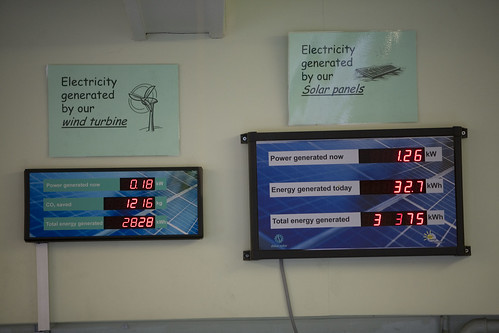
As well as guidance on the next steps to take, each participant received an electricity monitor which will enable them to see how much electricity they are using and monitor progress in reducing consumption over time.

Each of the Ashden award winners taking part are acting as ‘mentors’ for a group of three or four schools, available between workshops to answer questions and encourage them when things get difficult.
The next workshop will be in June when we will find out how much progress has been made.
Click here to read the rest of this post.
Thursday, 4 February 2010
The first round of judging is complete...
...and the UK and international shortlists have been decided.
In the last fortnight the two Ashden Awards judging panels have met to decide the UK and international shortlists. 152 initial expressions of interest have now been narrowed down to just 18 exemplars of local sustainable energy. 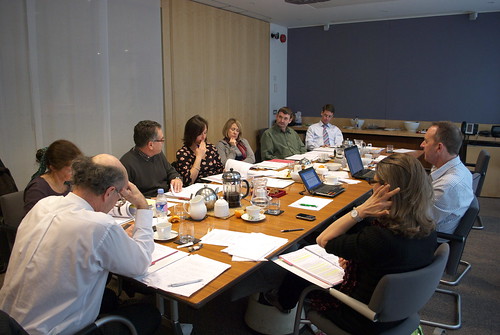
The judges were impressed by the applicants this year. They were pleased that, on the international side, applicants came from across three continents (Africa, Asia and Latin America), whilst in the UK there were interesting new approaches to both renewable energy and energy efficiency.
The difficult decisions, however, were finally made with the help of secret ballots. Judges will be visiting the 18 shortlisted applicants over the next two months.
To find out more about our past award winners and the judges please visit our website: www.ashdenawards.org
Friday, 22 January 2010
Solar PV in Laos
In 2007, Sunlabob won an Ashden Award for their work with solar PV in Laos. In 2009, they were awarded a World Bank funded procurement project, and have made a new video about their work:
You can also watch our own video about Sunlabob:
Thursday, 21 January 2010
On the road in Devon and Cornwall
Last week Simon, the manager of our UK support programme, spent several days visiting two past Ashden Award winners in Devon and Cornwall. These are just two examples from the Southwest of communities and enterprises tackling environmental and economic challenges with innovative and inspiring solutions. By identifying key areas of need and including their views and experiences into our current research, the aim of this visit was to ensure we continue to build a strong programme of support for our UK award winners.
Kensa Engineering was Simon’s first stop. Kensa Engineering, designs, manufactures, and tests heat pump systems for installation throughout the UK. Most are small-scale ground-source heat pumps (up to 32 kW), which are supplied in kit form so that they can be installed by non-specialist plumbers and builders. Set in an old tin mine, Simon had the chance to visit and view Kensa’s manufacturing process first hand. Kensa’s offices themselves, entirely heated by ground source heating, were an example of how old buildings can be retrofitted to use a more sustainable energy system. Cornwall has a high number of “hard to treat” properties that are either off the grid or have solid walls making them difficult to insulate and heat. Ground source heating has the potential to provide an alternative solution for some of these issues through providing locally sourced energy.
Simon’s second visit was to Community Energy Plus (CEP) . This organisation is tackling the financial challenges of inefficient energy usage. CEP runs the Home Health programme which provides free energy efficiency advice and efficiency measures to communities in deprived areas of Cornwall. This has significant and long-term impacts on households for whom over 10% of their income is spent on fuel, reducing both energy use and fuel poverty.
But this trip wasn’t without its challenges. A snow storm halfway through left Simon stranded for 6 hours through the night! After finally being rescued from a drift of snow Simon continued on his visits- what a trooper!
You can find out more about all of our winners by visiting our website.
Monday, 16 November 2009
Grasping the golden opportunity for a low carbon economy

Copenhagen needs to be a massive wake-up call for governments to realise the huge economic and social benefits that a low carbon economy can offer.
All the evidence we have from the Kirklees Warm Zone scheme shows that rolling out insulation and other large-scale energy efficiency schemes generates multiple benefits. Economically it brings job creation, skills development, fuel savings and increased benefits uptake. Every £1 invested returns around £5 into the local economy. This equates to over £90m going into the economy. An area-based scheme like ours delivers significant efficiency savings too.
The social impact means fewer families living in fuel poverty; warmer homes for the elderly and people with long term health conditions and fewer cases of carbon monoxide poisoning.
Add to this the environmental impact of reduced carbon - the estimated CO2 savings from 32,000 households are 22,556 tonnes per year for our measures installed up to June 2009. The expected savings at the end of the Warm Zone scheme are 55,000 tonnes per year.
A new report by the Audit Commission (October 2009) concludes that reducing CO2 emissions from domestic energy use is one of the quickest, cheapest and most effective ways to achieve the UK’s CO2 reduction targets. We would like the UK government to use existing Winter Fuel Payments to roll-out schemes like Kirklees Warm Zone on a wider scale. This should be part of the fiscal stimulus measures advocated in the Stern Report and would be a clear signal to the international community that the UK is taking serious and concerted action to reduce its own emissions.
We already have the evidence of what works. Copenhagen is a golden opportunity to convert this evidence into positive action that will save us all from the nightmare of climate change.
Read more Voices on Copenhagen
Kirklees Council’s Kirklees Warm Zone scheme won the Ashden Award Local Government category in 2009. The scheme is now used as an example of good practice across the UK by government departments, key environmental groups and other local authorities and has won several awards.
View the Ashden Awards video of Kirklees Council:
Our schools can show the way to a better future

Climate change is an ugly problem with devastating consequences. But it is a problem based fundamentally on our use of energy and it is a problem that can be solved. Indeed climate change offers us exciting opportunities to create a better, cleaner, more sustainable model of energy practice. But it needs all of us to find the solutions; to find them in our workplace, in our schools, homes, and communities. And we must start now.
But how? Ashley School has set up committed and passionate energy teams who challenge the status quo and identify where and how we can become more energy efficient. These teams measure and analyse the school’s energy use, and set tough targets that engage our communities in energy saving. We know from experience that these energy reduction initiatives need to be supported through grant funding programmes – which ideally should be sourced by a carbon tax – so that site-specific renewable energy technologies can be installed.
Most importantly, we recognise and reward our successes. In our school we are proud to have reduced our electricity consumption by nearly 80% in two years and our heating consumption by close to 30%. With creativity and commitment it can be done and we whole-heartedly encourage others to do the same – we have nothing to lose and everything to gain.
Read more Voices on Copenhagen
Ashley CofE Primary School, Walton on Thames in Surrey was joint winner of the UK Schools Ashden Award 2009. The school takes a pioneering approach to energy saving by setting targets to reduce energy consumption both inside the school and at home.
View the Ashden Awards video of Ashley school:
Friday, 13 November 2009
The real agenda for Copenhagen is tackling poverty

Poverty is the greatest threat to our environment. The poor use some of the most inefficient technologies and polluting fuels - not because they are cheap but because they don’t have a choice.
Today’s debate on the climate change treaty is seen as between the developed world and the developing world. It has led the rich in developing countries to hide behind the poor and the poor in developing countries to be short changed. The reality is we all have a vested interested in getting this treaty right – rich and poor.
We have before us a wonderful and unique opportunity – to implement climate change solutions that will also reduce poverty, like affordable solar energy systems. My social enterprise, Selco India has provided 112,000 solar home systems to low income households and institutions. We ensure that the systems are affordable by partnering with microfinance organisations that provide small loans. We have also set up a pilot fund to guarantee the deposits on solar systems for very poor families. Nothing can compare with the thrill of someone switching on a light for the first time and knowing how this can change their life!
Much, much more of this can be done and we are showing just what's possible. If we partner with the poor to create options for them to produce their energy sustainably – be it through renewable energies or clean stoves or biogas – we will get a double whammy: a curb on climate change but also a route for them out of the relentless poverty trap.
We must put poverty at the centre stage of Copenhagen and not focus on the false confrontation between developing versus developed world. When the discussion finally turns towards providing sustainable energy solutions for the poor a new dawn of social justice and economic progress will begin.
Read more Voices on Copenhagen
Selco Solar Light designs and sells solar home systems, primarily to meet the needs of the poor. The company was winner of the Outstanding Achievement Award from the Ashden Awards for Sustainable Energy in 2007 and a 2005 winner.
View the Ashden Awards video of SELCO:
