
If you're a Facebook user and would like to keep up to date on what's happening at the Ashden Awards, why not visit our new page on Facebook and sign up as a fan? Click here to get to the new page on Facebook
Facebook is a registered trademark of Facebook, Inc.
Thursday, 9 July 2009
Ashden Awards page on Facebook


Wednesday, 8 July 2009
Ringmer College: Green Car Grand Prix
Ringmer College, a 2008 Ashden Award winner, recently held its "Green Car Grand Prix", when there pupils built and raced electric cars.
 The kits to build the cars were from Greenpower, but the pupils had to do the assembly and design the bodywork of the cars.
Nine teams entered, and there were over 150 members of the public came to watch, and see the winning team awarded the trophy.
Ashley School: Inspire Alpine expedition
Ashley Primary School, a 2009 Ashden Award winner, has recently been on its Inspire Alpine expedition, travelling by train to Chamonix to learn about well-being at an individual, group and global level.


Vacancy at CAT
The Centre for Alternative Technology has a vacancy for a renewable energy consultant. Here are the details:
Job title: Renewable Energy Consultant
Salary: £17,485 per annum
Hours: 40 hours over 5 days. Flexible working required. Including some weekends and evenings.
Status: This is a permanent post subject to satisfactory completion of a six month probationary period.
CAT has developed its consultancy services over a number of years as part of its aim to ‘inspire, inform and enable’ people to live more sustainably.
The postholder will assist in the administration and provision of a high level of expertise and professional service, and in the development of the consultancy services over the coming years. The post holder will also help CAT keep at the forefront of sustainable technologies, and ensure best practice for CAT’s existing and future projects.
CAT Consultancy offers advice in the areas of energy efficiency, renewable energy, sustainable building, water treatment, sewage treatment and eco-centre design. We also offer advice on wider issues of sustainability. Environmental consultancy is a growth area, and as such, we are looking for someone to develop the Consultancy Department and expand its role within CAT. The majority of consultancy commissions require input from other CAT departments and specialists or sub-contracted consultants. Liaison with other departments and external consultants is therefore an important part of the job.
In general, as departments at CAT are largely self-managing, we expect the successful candidate to be capable of a high degree of self-motivation, to be at ease in a co-operative working situation, and to enjoy and be capable of working and learning within a multi-disciplinary organisation.
Consultancy-Specific
The person appointed will look for business opportunities to expand CAT’s consultancy service, liaising between our specialist departments and clients to ensure consultancy projects are delivered on time and within budget.
Consultancy Duties (approximately 4.5 days a week)
Other (approximately 0.5 day a week)
Co-operative Duties
Budget Heads and Department Co-ordinators
Person specification
We are looking for someone with the following attributes:
Essential
Desirable
Closing date for applications is 17th July 2009
To apply, or for more information contact Donna Robinson, Human Resources Assistant:
donna.robinson@cat.org.uk
016540 705955
Tuesday, 7 July 2009
From practice to policy
The Ashden Awards for Sustainable Energy commissioned the Institute for Public Policy Research to prepare this report. The full version is available on the Ashden Awards website.
Foreword
Sarah Butler-Sloss
Executive Chair and Founder
The Ashden Awards for Sustainable Energy
What can the government do to help local sustainable energy become part of the fabric of communities across the UK? The answer to this question will partly determine whether we can create a low-carbon economy and meet the ambitious targets we have set to reduce greenhouse gas emissions.
Some answers to this question lie in this briefing which is the result of detailed consultations with
our UK winners – businesses, local authorities, community groups and charities – who suggest ways to overcome the barriers they face in trying to deliver renewable energy, energy efficiency and other forms of local sustainable energy in their communities.
Their responses, which are based on substantial know-how and best practice in their individual fields, give us an idea of the enormous challenges ahead, but also a sense of hope that it is possible, with the political will and appropriate policies, to meet them. Although these practitioners acknowledge that there have been a few policy successes, there are also clear failures. In particular they highlight problems of funding – the amount and the lack of consistency in funding schemes – and planning barriers. They call for continuous funding streams and much stronger policy coherence to promote sustainable energy. All are unanimous in wanting to help improve on the past record and be part of a future that is much brighter.
I set up the Ashden Awards for Sustainable Energy in 2001 to reward sustainable energy champions across the UK and developing world that are bringing social and economic benefits to their communities. Since then, in addition to our annual Awards scheme, we have developed a broader support programme for our winners. In the UK our emphasis is increasingly on promoting the exemplary work of our winners and in particular helping them influence policy on sustainable energy in every way we can. This briefing is part of that effort.
The contributions made in this study show us that the government can learn a great deal by working in partnership with local providers of sustainable energy – like our Award-winners.
This briefing is aimed at policy makers at all levels and anyone else who would like to see local sustainable energy become a visible and integrated part of every community across the country, bringing all the wider social benefits that that means.
This report is the precursor for a larger research-based report we plan to publish early in 2010 which will follow up on these initial findings and recommendations.
Executive summary
This Briefing Paper draws on the experience of the winners of the Ashden Awards for Sustainable Energy to make practical policy recommendations aimed at increasing the scale and scope of sustainable energy in the UK. The paper is based on research carried out with UK winners of the Ashden Awards through an online survey of winners and in-depth interviews with a smaller group of awardees.
Local sustainable energy at the household and community level has a range of potential benefits.
The first of these is emissions reduction: 65 per cent of household CO2 emissions could be saved by distributed generation by 2050 if supportive policies were put in place. Another benefit is improved energy security through reduced demand for imported gas: almost a fifth of UK energy demand could be met through community scale generation with the right support. Community energy can also make the transition to a low carbon economy real for people, with schemes they can see and own in their own neighbourhood, helping build political support for sustainable energy policy.
Many organisations across the UK – from businesses to local authorities and charities – are actively demonstrating the benefits of local sustainable energy. However, despite their good work, the full potential of sustainable energy is far from being realised in the UK. While the energy efficiency of housing in the UK has increased in the last ten years, over four-fifths of UK houses have yet to be fully insulated. Similarly, while installed renewable energy capacity, both large-scale and local, has increased in the UK in recent years, it still accounts for only around two per cent of total UK electricity generation.
Winners of the Ashden Awards have a valuable perspective on bridging the gap between the UK’s aspirations and delivery of a sustainable energy. Many were pioneers of sustainable energy well before it became popular and have a wealth and diversity of experience to share. Some focus mainly on energy efficiency, while others are specialists in renewable energy, and within that on renewable heat and renewable electricity. Most who focus on energy efficiency work with households, whereas those who focus mostly on renewable technologies tend to work with organisations such as schools, local councils, businesses, and other institutions. Two are designers or manufacturers of renewable technologies.
Through our research, we have aimed to understand their perspectives on the policies that are working to deliver sustainable energy in the UK and those that are not, and how the barriers that remain to delivering sustainable energy could be overcome. Mr Aitkin has benefitted from Leeds Council’s ‘Health through warmth’ schemePolicy successes
 Locals visit Arun council’s mobile energy efficiency advice centre, Littlehampton
Some policy interventions have clearly been successful in enabling growth in the sector. The single most important policy for Ashden Award winners has been the Energy Efficiency Commitment (EEC) and its successor the Carbon Emissions Reduction Target (CERT), placing an obligation on energy suppliers to provide funding for carbon saving measures to households. A third of Award winners that were surveyed said that many of their sustainable energy successes would not have been achieved without the programme.
The next most useful set of interventions cited were the support programmes (including funding) of the Energy Saving Trust and the Carbon Trust, along with fuel poverty programmes such as Warm Front. Another useful policy for Award winners has been the Home Energy Conservation Act – largely because it almost instantly created sustainable energy champions within local authorities with housing responsibilities, and ensured that home energy efficiency received a level of resource and political attention at the local level.
Several interviewees also highlighted the importance that building regulations, such as the Code for Sustainable Homes, have had on increasing the uptake of renewable energy and energy efficiency measures. Changes in the planning regime were also felt to have been useful, particularly the Merton rule adopted by local authorities requiring all new developments to generate 10 per cent of their energy needs from on-site renewables.
The Low Carbon Buildings Programme (LCBP) was also cited as a policy that had helped many Award winners, not always because of the capital grants it has provided (which have been problematic), but because of the requirement for training and certification. Bike shed at Dulas, Powys, Wales – a large PV solar panel generates electricity for the building
Policy barriers
However, several existing policies and approaches have failed to meet practitioners’ needs. Funding – the amount and consistency of it – was cited as the key barrier by 80 per cent of respondents, making it difficult to plan work, and meet expectations.
The ‘stop-start’ nature of some policies has been particularly problematic. EEC/CERT and the LCBP were both cited as suffering from this flaw. Under EEC/CERT, there have been periods of inactivity when energy suppliers have hit their targets and stopped carrying out energy efficiency works. This has proved very problematic for the installation companies. The LCBP has also posed problems because funding has not been available in a continuous manner. There was concern among some interviewees that the transition from the LCBP to the introduction of the proposed feed-in tariff could cause this to happen again.
Award-winning businesses are finding it difficult to access capital, which is a significant barrier at start-up and when seeking to expand their operations. The credit crunch is exacerbating the situation. Some Award winners have experienced difficulties in securing financing for their own projects. Others fear that business may dry up as clients are unable to access finance or shift their focus away from environmental concerns.
The lack of householder engagement and interest is also clearly a significant barrier to Award winners working to reduce carbon emissions from the household sector, particularly in the absence of regulation to compel action. Levels of public engagement and awareness of sustainable energy and climate change were seen as low and further behind other countries, particularly in Europe.
Planning permission was highlighted as a significant regulatory barrier, particularly for larger-scale sustainable electricity and heat projects. Other barriers were also identified, the most significant being the difficulty faced in retrofitting homes, particularly those which are ‘hard to treat’ (i.e. those with solid walls or off the gas network). Measures for these homes attract higher costs. The complexity of connecting smaller sustainable electricity schemes to the grid was also cited as a barrier. Several interviewees have also encountered difficulties in recruiting the technical skills needed, pointing to a lack of training opportunities. Private landlords have benefited from Arun Council’s financial help to insulate their properties
 Copper piping used in the manufacture of Kensa’s ground source heat pumps, Truro, Cornwall
Policy solutions
Award winners were asked about their recommendations for future policy, the types of policies which are most needed and which ones they would prioritise to overcome the barriers facing the growth of sustainable energy in the UK.
Not surprisingly, alongside the issues of coherence and continuity, addressing the problems with funding was seen as a priority. The policies which were perceived as most likely to help in the delivery of their work were sustainable energy capital grants and a renewable heat incentive. Several other policies including energy efficiency grants, a feed-in tariff and a soft loans scheme rated a close second.
Many Award winners were keen to see a continuous funding mechanism rather than the current ‘bidding’ process which is increasingly being favoured by programmes like the Community Energy Efficiency Fund (CEEF). In particular, funding targeted locally for area based approaches, suitable for off-gas-grid and solid-walled properties, was suggested. In addition, more funding dedicated to capacity building in the sector was requested, including for technical and project design, management support and for training and skills development.
The role of local authorities and the embedding of targets at the local level were seen as an important means of improving the implementation of national sustainable energy policy. Several Award winners were keen to see targets for local authorities to create buy-in and ownership of sustainable energy implementation, accompanied by consistent financial support to ensure effective delivery. Local authorities’ role in the supply chain and their procurement capacity were also seen as integral to embedding local sustainable energy. In addition, enhanced training and resources for planning officers on sustainable energy in local authorities was seen as important.
More broadly, most Award winners thought much greater policy coherence to promote sustainable energy was necessary, with a strong, long-term policy framework needed to avoid the problems encountered by the ‘stop-start’ nature of some policy interventions to date. Many were keen to see greater connection between different policies, providing a more cohesive message to stakeholders, with for example, more integration through education, skills and training programmes, and Regional Development Agency (RDA) business support programmes.
Almost 87 per cent of Award winners stated that they would like greater involvement or input into the development of Government policy on sustainable energy. Winners favoured a range of different options for the form this input should take, including interviews and workshops. However, concerns about the efficacy of the Government’s policy consultation processes and how much influence they genuinely have on outcomes would need to be addressed. Chipping wood to be used in a woodfuel heating system, Rural Energy Trust
 Solar PV installed by Dulas Ltd at Dyfi Eco Park, Machynlleth, Powys, Wales
Conclusions and recommendations
Looking across all the areas of local sustainable energy, two common themes can be identified. One issue that was emphasised again and again is the importance of government and indeed all political parties committing to a long-term strategy, offering predictable funding flows. The other common theme was the need to develop policies that are not just about the large energy companies, but also about local and often smaller actors, including local authorities, charities and smaller companies. Award winners referred to the importance of partnerships between local authorities and charities, who are often the main intermediaries with community organisations. Government could provide briefings and help on what different partners want, how they operate and what they can offer.
The kinds of organisations that the Ashden Awards celebrate are often highly innovative and creative, but they have to work around a lack of resources and support, largely because the key policy instruments have not been tailored to their needs, but rather to those of the large energy suppliers. This makes it difficult for them to plan and deliver sustainable energy to the communities they work with in a predictable way. Hence a place should be found within the policy framework for these kinds of organisations to play a more active role and access more funding. To help ensure that happens, further research or experimentation is needed into a number of possible changes to policy including:
Energy efficiency
Renewable electricity
Renewable heat
The Ashden Awards for Sustainable Energy should continue to act as a conduit between Award winners and policy-makers to help ensure that the types of policy changes outlined above are explored fully and the voice of organisations who really deliver sustainable energy locally is heard. In the coming months, there will be invaluable opportunities to influence policy as the Government develops its plans to meet the carbon budgets set by the Committee on Climate Change, the European 2020 renewable energy target, and the Heat and Energy Saving Strategy. These opportunities should be seized to transform the prospects of sustainable energy at the local level in the UK Installing cavity wall insulation
 Making Kensa’s heat pumps, Cornwall
A PDF of this executive summary, and of the full report, is available on the Ashden Awards website.
Monday, 6 July 2009
Bangladesh – at the front line of climate change
Paul Rose, BBC presenter and expedition leader is a highly supportive Ashden Award ‘Advocate’ who helps raise awareness of the work of our winners. Paul has just returned from a trip to Bangladesh visiting sustainable development projects and witnessing at first hand the country’s vulnerability at the front line of climate change. One of the highlights of the visit was spending a few days with Rezwan who runs an amazing project bringing solar energy to remote waterside communities with a fleet of boats. Shidhulai Swanirvar Sangstha was an Ashden Award winner in 2007, working in Chalanbeel, a region flooded in the monsoon season (when Paul was there!). The boats’ roofs are covered in solar panels that charge batteries for the solar systems they carry to local communities. They provide education for the local young people, particularly girls, training on agriculture, health advice, mobile phones and internet access.
 In the evening, films are projected onto a sail to educate villagers. Some boats also act as mobile health clinics where women queue up to access services they cannot get elsewhere. As Rezwan explained to Paul, Bangladeshis will probably have to live on the water if climate change continues at the present rate as the whole country could be flooded. It’s essential that this approach to reducing the social and environmental vulnerability of communities is expanded.
 Paul filed stories every day for the BBC news website which provide a fascinating and colourful insight into the communities he visited.
BBC online stories
Paul’s blog
Thursday, 2 July 2009
WoodGas stove demo
The following stove demonstration is by Mike Pepler, Technical Manager at the Ashden Awards.
One of the key issues in developing countries is changing the wood stoves people use for cooking so that they are more efficient and emit fewer harmful pollutants. Gasifying stoves are one area where research is still ongoing, and this demonstration is of a stove that uses a fan powered by two AA batteries. Being battery powered, this is not intended for use in developing countries, but is aimed at the outdoors and camping market in developed countries. However, some of the profits from its sale go to fund research on developing a similar stove for developing countries, but with a thermoelectric generator to power the fan.
Here's the details on how it works.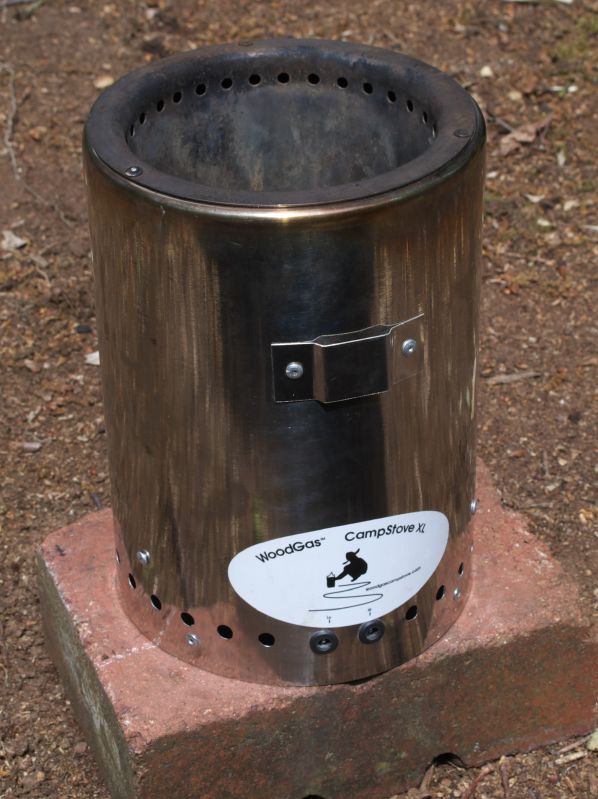





To see the range of stoves designed and used by past Ashden Awards winners, click here
Mike
This demonstration was originally published on Mike's personal blog.
Vacancy with Just Energy
JUST ENERGY
a not-for-profit social enterprise working with low-income communities
Chief Executive Officer (CEO)
Location: South Africa
Salary: circa £42,000 net (c. £60,000 gross) depending on experience
Reports to: Just Energy Board Chair
Just Energy is a not-for-profit social enterprise that works with low-income communities to maximise community revenues from medium sized renewable energy businesses. Just Energy was founded and launched as an independent business by Oxfam GB and draws on the technical and financial collaboration of a diverse range of private sector, NGO and academic partners.
As energy prices rise and technology costs fall, renewable energy is becoming an increasingly viable option for meeting the rapidly rising energy demands in developing countries. These changes in energy markets provide an income generating, skills development and job creation opportunity for low-income communities if they can overcome a range of technical and financial barriers to their involvement.
Just Energy will jointly develop renewable energy projects with communities, helping to overcome these barriers by:
Just Energy projects will also increase the supply of clean energy for local and national consumption and will provide an investment opportunity in projects that have good social and financial returns. Just Energy renewable energy projects will range in size from approximately 25 - 80 MW and will generate income through sale of electricity to the local grid. They will initially focus on harnessing wind energy, and will expand to include other technologies such as solar and bio-mass as markets and technologies develop.
Click here for full details
Job vacancy with Architype / Oxford Brookes Uni
We are posting this job advert on behalf of Architype, a UK Ashden Award winner
Sustainable Design Development Manager (KTP Associate)
Salary: £24,000 – £28,000 including bonuses, depending on qualifications and experience; full-time, temporary (2 years)
Play a part in an exciting partnership between a leading architecture practice and one of the UK’s foremost research institutes in sustainability.
Oxford Brookes University and Architype Ltd have established a two-year Knowledge Transfer Partnership (KTP) which will monitor the post-occupancy performance of sustainable buildings, model the significant variables and create a system to feed the knowledge into new designs.
The KTP Associate will lead the project within Architype, based at their offices in central London and rural Herefordshire, and supervised by the Oxford Institute for Sustainable Development at the university.
This post will suit an architect/engineer with excellent knowledge of building practice and construction. Qualifications: a first degree (2:1 or above) in architecture or engineering; a higher degree (minimally taught Masters) related to sustainable design is desirable.
* Full details are at https://edm.brookes.ac.uk/hr/hr/vacancies.do (Ref: 294/16692/BC)
* Closing date: Monday 6 July 2009
* Please mention Get Sust! when you apply
* For more information on Oxford Brookes University and the Oxford Institute for Sustainable Development, see www.brookes.ac.uk/schools/be/oisd For information about Architype, see www.architype.co.uk For details of Knowledge Transfer Partnerships, see www.ktponline.org.uk
Tuesday, 23 June 2009
Ashden Awards blog from Jonathon Porritt
The Met Office is going to be publishing its detailed projections for the impacts of climate change on the UK today – in unprecedented geographical detail. It’s not going to be pleasant reading.Read the full blog here Click here to read the rest of this post.
So I’ve been cheering myself up by reminding myself, all over again, of the power of positive thinking. Just a week ago, the Ashden Awards for Sustainable Energy held their annual bash at the Royal Geographical Society, with the Prince of Wales handing out the Awards and giving a stirring speech.
Thursday, 18 June 2009
Arun to launch Renewable Advice Service
Arun District Council won an Ashden Award in 2008 for their work on energy efficiency and renewable energy:
Now, using some of the prize money they received, they are preparing to launch their Renewable Advice Service.
This will provide free and independent advice to local residents who ant to reduce their carbon footprint and fuel bills. Information will be given on what technology will be most cost-effective, taking into account the features and location of the resident's home. The advice will include solar hot water, solar PV, wood-fired boilers and stoves, heat pumps (air, ground and water sourced) and small-scale wind turbines.
The advice service will officially start with a launch event in the Littlehampton Civic Centre on Wednesday 1st July 2009 from 4.30-7.30pm. Read more about it here
Tuesday, 16 June 2009
Ashden Awards Ceremony 2009
Last Thursday night, the event we have all been looking forward to - the Ashden Awards night - took place. This year we had HRH Prince Charles speaking and he gave a forthright speech about the climate change crisis facing us, and his strong admiration for all the finalists lined up for awards. Having been a keen supporter and patron of the awards for many years, he has met many of them individually and taken an interest in their work. This year he presented the awards to each winner, and the school pupils in particular were proud to be able to meet him and talk about their achievements.
 We watched a short film about each finalist, heard a brief but powerful speech from each one about their work and then the announcements were made. Wait for it… In the UK first prizes went to Kirklees Council for their free, massive roll-out of insulation; Geothermal International for their large-scale installations of ground source heat pumps for heating and cooling buildings; Ashley CofE and Currie School were awarded jointly for their amazing low carbon approach to all aspects of school life; and the Sustainable Energy Academy showing that older homes can be made low-carbon. Second prizes went to Devon County Council for boosting the green energy sector in the county; Architype for their exceptional design of sustainable buildings and Marches Energy Agency for enthusing local communities to take the low carbon path.
Our international finalists are literally changing peoples’ lives in the developing world – and this year has been no exception. We had programmes bringing electricity to Ethiopian villages for the first time - where only one percent of the population has access to grid electricity – through affordable solar home systems; solar-heated greenhouses in the Himalayas providing vegetables year-round, making for healthier families; a Nicaraguan social business spreading renewable technology throughout the country; a gasification plant using local biomass and bringing a reliable power supply to businesses in Bihar, India; and a Ugandan business producing briquettes out of agricultural waste to replace wood and charcoal, protecting local forests. This year’s Outstanding Achievement Award went to the wonderful IDE in India who are scaling up the production of their simple treadle pumps for irrigation that are lifting thousands of poor farmers in India out of poverty. And last but not least… the overall Energy Champion award went to a remarkable collaboration between the well-known US stove programme, Aprovecho Research Center that is working with Shengzhou Stove Manufacterer in China to boost the volume of high quality, efficient stoves manufactured aiming to reach the millions of poor people in the developing world who need them.
Beyond the giving of these awards, we’re looking forward to working with many of these inspiring organisations over the next year, supporting their expansion and replication in collaboration with investors, businesses, NGO’s, policy makers and other partners, many of whom were at the Ashden Conference last week and the awards night.
You can read more about these fascinating initiatives, and find photos and films about their work at www.ashdenawards.org
Friday, 29 May 2009
Ashden Awards Imperial College conference - 10 June 2009
There are still a few spaces available at this event, so if you'd like to come, please send your name, organisation and email address to: conference@ashdenawards.org
Local solutions to climate change
The Ashden Awards Imperial College Conference
10 June 2009
The conference will bring the achievements of the 2009 International and UK Ashden Awards finalists to a specialist audience of practitioners, academics and students with a practical interest in sustainable energy. We will show short films about each finalist’s work, and then you will hear from them in person, talking about what has made their work so successful. With Q&As built into each session, and time during breaks to meet the finalists, there are ample opportunities to find out what you really want to know.
The Ashden Awards promote the widespread use of local, sustainable energy which can address climate change, alleviate poverty and improve quality of life. Find out more about us and our work at www.ashdenawards.org
We are delighted to be running this conference in partnership with Imperial College, London, and we are most grateful for significant support from the Faculty of Natural Sciences.
There is no charge for the conference or lunch, but numbers are limited, so please confirm names, positions and email addresses of people attending, by email to conference@ashdenawards.org. If you subsequently find that you are unable to attend, please let us know so that your place can be offered to someone else. The lunch provided will cater for vegetarians; if you have any other dietary requirements, please mention them when you confirm attendance.
Programme
09:30 Registration and refreshments
10:00 Welcome and introduction to the day
Professor Sir Brian Hoskins, Director of the Grantham Institute for Climate Change, Imperial College
10:10 Session 1: Buildings for the future
10:50 Session 2: Green energy businesses
12:15 Session 3: Mobilising communities
14:00 Session 4: Radical carbon cuts
15:30 Session 5: Scaling up
Thursday, 28 May 2009
India's activists push their government to put a price on carbon
Harish Hande, of Ashden Award winner SELCO, is one of a coalition of Indian entrepreneurs, activists and academics campaigning for their government to take action on climate change, as reported by the New York Times:
In two days of talks with U.S. lawmakers and policy experts in Washington, D.C., the group said Indian society is starting a serious internal discussion about its role in addressing global warming.Read the full story here
"This is about recasting the debate," said Malini Mehra, founder of the Centre for Social Markets, a nonprofit based in India and the United Kingdom that promotes entrepreneurship and sustainable growth.
"The Indian government's agenda will not change until Indians want it to change," she told a U.N. Foundation forum. "I will not rest until we have a radically different position on the Indian government's side."
To use expandable posts, type your summary here
and the rest of the post here. Otherwise switch to "Edit HTML" and delete all this, then switch back to "Compose"
Click here to read the rest of this post.
Tuesday, 26 May 2009
Powering our way out of poverty
2007 Outstanding Achievement Award winner, Harish Hande of SELCO, has written an article on the BBC News website
As the world's leaders consider how to finance our battle against climate change, the financing of practical, affordable solutions for poor people in countries like my own, India, appears to be of little interest.Read the full story here Click here to read the rest of this post.
It is nearly 130 years since Thomas Edison gave us the electric bulb, yet more than two billion people on this planet still do not have the luxury of electricity.
Up to 50% of households in India still have no access to modern lighting. Millions of street vendors, whether in the hi-tech city of Bangalore, India, or Kampala, Uganda, still resort to kerosene or candles to sell their meagre wares.
Wednesday, 20 May 2009
Putting the D into the CDM: Acquiring Carbon Finance for Development Projects
This post is to publicise a workshop that Gold Standard Project Developer CarbonAided, the Hedon Household Energy Network and Imperial College are holding on 15th June 2009

Later this year a landmark UN meeting will be held in Copenhagen to determine how the World will continue to combat global warming when the current regulatory period, under the Kyoto Protocol, ends in 2012. Many features of global carbon policy after 2012 have yet to be finalised, however policy makers in both the industrialised and developing world are emphasising that the Clean Development Mechanism will continue but must be improved to genuinely promote investment in projects that have real sustainable development benefits for the world’s poor.CarbonAided is helping Ashden Award winner SKG Sangha to access carbon finance to build bio-digesters to supply the cooking needs of 20,000 families in rural India
The sentiments of UN policy makers and existing EU climate regulations have created a significant growth in demand and premium prices for credits created by projects with real social benefits, such as Gold Standard projects. Both the voluntary and compliance carbon markets have seen a growth in carbon finance available for development projects, as buyers demonstrate a preference for credits created by projects with identifiable positive social impacts.
CarbonAided and The HEDON Household Energy Network a project of Eco Ltd and Ch4nge have been working with companies, NGOs, charities, project developers and policy makers over the past few years helping them to participate in carbon markets and to increase the number of development projects that are able to access carbon finance. We have found that there is lack of understanding of the potential for carbon finance. We have also discovered a number of myths surrounding the process of developing projects and obtaining finance from carbon credits to implement them.
We will draw from our expertise to deliver an intensive one day workshop that will enable entities thinking about participating in carbon projects with social benefits to understand:
- The project cycle for carbon credit based projects
- How carbon markets work
- Carbon regulations, voluntary carbon markets and regulatory issues after 2012
- Whether or not carbon markets represent a viable source of funding for their activities
- The different carbon accreditation standards and those that should be sought
- Choosing between CDM and voluntary carbon accreditation
- Choosing between programmatic and non-programmatic approaches
- How carbon funding can be accessed - the processes, timelines and costs involved
- The risks and hurdles that project developers will face and how these can be overcome
- Sources of technical assistance and upfront funding
- Companies, charities and NGOs that are interested to use carbon finance for their activities
- Low carbon technology providers that are looking to export their technologies to the developing world
- Sustainable investors
- Policy makers
Cost
Businesses: £740
Public sector and NGOs: £592
Students: £296
Developing country attendees: £148
The workshop will be held in London, UK, on 15th June. Spaces for this workshop will be limited to 30 so please indicate your interest in attending by completing the form as soon as possible. Please note that places will only be guaranteed on receipt of payment. Register your interest now and qualify for a 10% early bird DISCOUNT when it comes to booking your place!!!
Click here for more info
Click here to register your interest
Click here to read the rest of this post.
Wednesday, 13 May 2009
Global green awards’ 2009 finalists selected
On 11 June 2009 sustainable energy champions from Ethiopia, India, Nicaragua, Uganda and the US will be recognised with cash prizes by the Ashden Awards for Sustainable Energy for their life changing solutions to poverty and climate change. One will be crowned global Energy Champion, with an associated prize of £40,000. An Outstanding Achievement Award will also be made to a previous Ashden Award winner who has forged ahead in the field at the Awards ceremony, held in Central London. The finalists will present their work to their peers and other experts at the Ashden Awards Imperial College Conference, to be held on 10 June.
This year’s final six demonstrate massive potential for growth and replication:
Ladakh, India: A highly insulated, heat-retaining greenhouse powered only by the sun enables villagers to grow vegetables through the winter, even when outside air temperatures fall below -25C. Since 2005 nearly 600 greenhouses have been built cheaply by masons using mainly local materials.
Bihar, India: A new biomass gasification system generates electric power for eight hours per day, providing a popular alternative to an unreliable grid supply. Electricity is currently sold to ten businesses which previously used diesel generators. Most of the biomass is ‘dhaincha’, a local woody plant which grows in water-logged areas where crops cannot be grown.
USA/China: A cheap and efficient stove saves 40% fuelwood and reduces polluting emissions by 50-75% compared to traditional cooking. It is manufactured in a factory in China and used in programmes as widespread as South Africa, India, and Argentina. 60,000 stoves have been sold.
Nicaragua: 2,000 solar home systems and 560 larger solar energy systems have been sold and installed in rural areas by a 25-year-old family-run business, for uses including light and communications for schools and police stations; vaccine and blood refrigeration for clinics; pumps for village water supplies; and power for mobile phone masts.
Ethiopia: A village scheme pioneering rented small photovoltaic (PV) solar-home-systems in each of 1,100 homes was successfully trialed to replace kerosene lighting and dry cell batteries. It has now supplied a further 1,000 systems to outlying areas, and has established a centre providing training for solar technicians.
Uganda: A business started making briquettes from agricultural waste for its own use, but now sells over 100 tonnes per month to schools and other businesses, and has installed over 1,300 large, efficient stoves for cooking using briquettes. Briquettes replace fuelwood and charcoal, thus reducing deforestation and greenhouse gas emissions.
click here for the full press release in PDF format
UK finalists for Ashden Awards 2009 selected
On 11 June 2009, local sustainable energy champions from around the UK will compete for the Ashden Awards 2009 at a ceremony in London. Finalists offering climate change
solutions will take part – from Birmingham, Coventry, Devon, Herefordshire, Milton Keynes, Scotland, Surrey, and Yorkshire. International schemes will also be recognised for their work. The contenders will present their work to their peers and other experts at the Ashden Awards Imperial College Conference on 10 June.
This year’s eight UK finalists in four categories demonstrate massive potential for growth and replication:
UK Business Award finalists
Architects put environment at heart of building design
A firm delivering low-energy architecture in close consultation with their buildings’ end users has beaten 2006 building regulations standards by at least a third on both energy and CO2.
Business booms for carbon-cutting heat pumps
A fast-growing company has installed nearly 800 heat pumps for heating and cooling buildings in just six years. By using renewable heat from the earth they are saving tens of thousands of tonnes of CO2 per year compared with gas boilers and conventional air conditioning.
UK Charity Award finalists
Galvanising communities to adopt low-carbon lifestyle
A local Energy Agency runs the gamut of inspirational and practical support to communities, reaching households, businesses and local groups through tailored programmes.
Low carbon show-homes demonstrate how to green older houses
A network of pioneering owners of hard-to-treat, low-carbon homes shows how to reduce carbon emissions by 60%, inspiring more than 36,000 visitors.
UK Local Authority Award finalists
Insulation scheme blanketing metropolitan borough
Ward by ward, a local authority is offering to provide and install free cavity-wall and loft insulation to every home that can use it. So far the scheme has created 140 jobs and installed insulation in more than 21,000 households.
Boosting local renewable energy businesses
A county council scheme stimulating rural regeneration has created 55 jobs and safeguarded 16 more by supporting both supply and demand for renewable energy. So far it has led to 109 renewable energy installations, with a capacity of over 2 MW in SMEs, community organisations, and homes.
UK Schools Award finalists
Antarctic expedition inspires carbon-saving headteacher
The head of a 270-pupil primary school has worked with the whole school community to change behaviour and achieve sustainable carbon savings, including an overall reduction in electricity use of 48%.
Scottish school embraces sustainable energy
A 900-pupil secondary school has taken big steps to reduce energy use over the past 10 years, from auditing and changing regular building maintenance and upgrades, to installing a wind turbine and solar thermal system. Pupils enjoy cross-curricular learning on sustainable energy and lead campaigns at school and in the community.
click here for the full press release in PDF format
Thursday, 7 May 2009
MD of Ecotricity appears on Rich List 2009
Dale Vince, Managing Director of Ecotricity is listed for the first time on the infamous Sunday Times Rich List 2009, in 657th position. As he hastens to add "I’ve not suddenly got an awful lot of money, this £85 Million is what the Sunday Times team reckons Ecotricity is worth".
Ecotricity were 2007 UK business winners of the Ashden Awards for Sustainable Energy for their role in helping boost the wind energy sector in the UK, particularly for their emphasis on community consultation.
Read Dale's comments on his blog
Wood Energy go big with biomass
Wood Energy Ltd based in Exeter, Devon, has installed large biomass boilers at two prestigious sites - the Royal Botanical Gardens in Edinburgh and the Devon County Hall in Exeter.
The John Hope Gateway, Royal Botanical Gardens Edinburgh (RBGE) new biodiversity and information centre, will open in summer 2009. The new building, set to be a shining example of sustainability, has many green features including a 200kW biomass boiler provided by Wood Energy Ltd.
Devon County Council is reducing its energy costs and carbon emissions at County Hall with a new biomass boiler installed by Wood Energy. The 840kW Binder wood chip boiler uses sustainable woodchip fuel supplied locally, rather than conventional non-renewable fossil fuels such as gas, oil, coal and electricity and will be one of the biggest boilers of its kind in the southwest. The boiler, which will reduce heating carbon emissions by 60% and save upwards of £20,000 a year, replaces the original 40 year old boilers which produced 269 tonnes of CO2 a year and cost over £55,000 to run. County Hall already has an energy efficiency rating of 'C' on scale of A to G (A being the best), which is above average for an older building. The new biomass boiler will improve the Council's energy efficiency even further, with a rating of B predicted.
"Everything about this investment makes good sense" said Cllr Brian Greenslade, Leader of Devon County Council. "It's good for the environment by significantly cutting our heating carbon emissions and good for Devon's economy by using a local suppliers. This is an integral part of Devon County Council's commitment to reducing its energy consumption, and to our goal of making Devon the greenest county."
John Wilding, Forestry Manager at Clinton Devon Estates agrees: "We are delighted that Devon County Council has chosen to switch to a wood-fuelled biomass boiler. Where it leads, many others will no doubt follow as there are many environmentally aware, commercial and public sector bodies who looking for green technology which is also practical, cost-effective and comes with a reliable ongoing source of sustainable fuel."
The wood chip boilers and “real time” graphical representations of the boiler used as display and educational material at both sites were supported by the Ashden Awards prize money won by Wood Energy Ltd in 2007.
Subscribe to:
Posts (Atom)
